The talkies: how sound came to the movies
In just a few years at the end of the 1920s, synchronized sound transformed cinema. Here is how sound-on-disc and sound-on-film worked, and what the switch changed on set and on screen.
Inventors had tried to combine moving pictures with recorded sound almost from the start. Edison's company experimented with pairing phonographs and film in the 1890s. But it took until the late 1920s for sound to be loud enough for a large theater and reliably in sync with the picture. When it arrived, it changed the industry within about three years.
Two ways to put sound on a film
The early sound era had two competing systems:
| Sound-on-disc | Sound-on-film (optical) | |
|---|---|---|
| Example system | Vitaphone (Warner Bros. and Western Electric) | Movietone (Fox), RCA Photophone |
| Where the sound lives | A large phonograph record played with the projector | A strip printed on the film next to the picture |
| Sync | Disc and film had to be started together; a broken film could throw it off | Always locked to the picture |
| Editing | Very hard to edit | Can be cut along with the picture |
| Outcome | Phased out in the early 1930s | Became the standard for decades |
Optical sound works by turning the sound into a pattern of light and dark on the film. In the projector, a lamp shines through that strip onto a light-sensitive cell, which turns the changing light back into an electrical signal and then into sound. Sound-on-film was developed by several inventors, including Lee de Forest, whose Phonofilm was shown in the early 1920s. Optical tracks remained on 35mm prints for the rest of the film era.
Don Juan, The Jazz Singer and the breakthrough
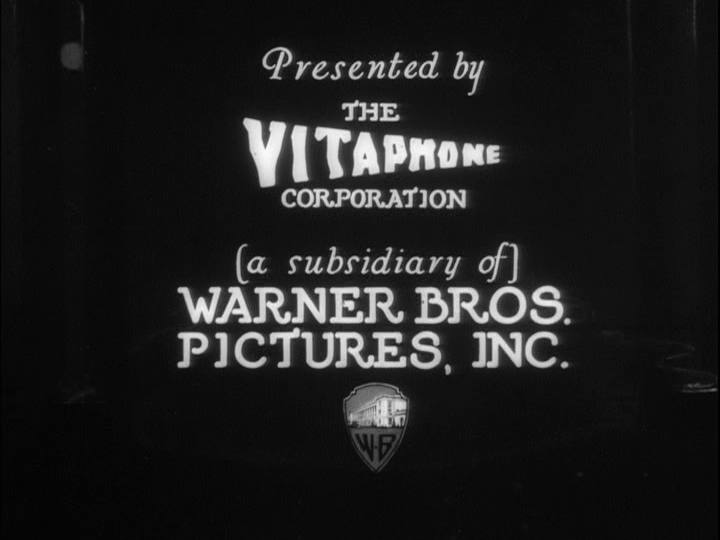
Warner Bros. was a smaller studio in the mid-1920s and took a gamble on Vitaphone. In August 1926 it released Don Juan with a recorded orchestral score and sound effects, but no spoken dialogue.
The turning point came on October 6, 1927, with The Jazz Singer. It was mostly a silent film with intertitles, but it included several synchronized songs and some short spoken passages. Audiences reacted strongly to hearing a star speak and sing on screen, and the film was a major hit.
In 1928 Warner released Lights of New York, usually described as the first all-talking feature. By 1929 the major American studios were converting to sound as fast as they could, and many theaters were rewired.
What sound changed on set
Sound brought severe problems for filmmakers at first:
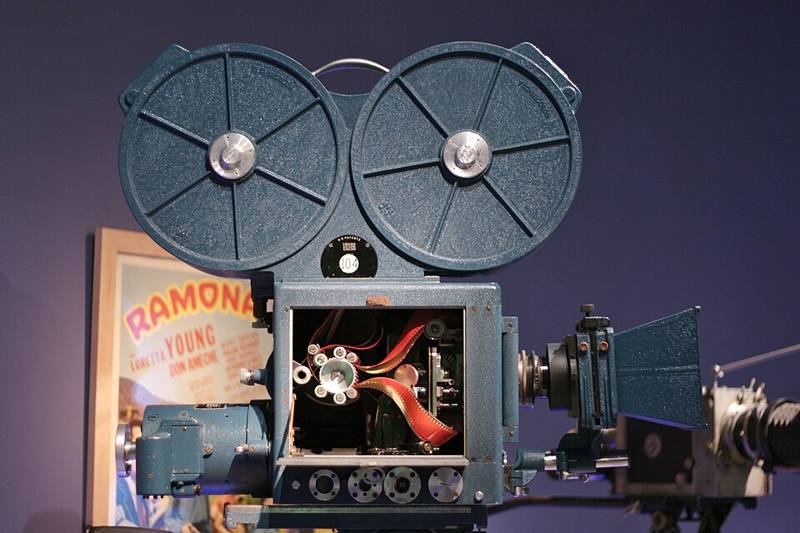
- Noisy cameras. Camera motors were loud, so cameras were shut inside soundproof booths, which made early talkies static and stagey.
- Hidden microphones. Microphones were hidden in flower vases and props, and actors had to stay near them.
- The boom. Crews soon began hanging the microphone from a pole over the actors. Director Dorothy Arzner is often credited with one of the earliest uses of a boom microphone in 1929.
- Blimps. Cameras got soundproof housings so they could move again.
- Fixed speed. Sound needed a constant speed, so 24 frames per second became the standard. See frame rates.
- New frame shape. The optical track took space on the film, so the industry adopted the Academy ratio of about 1.37:1 in 1932. See aspect ratios.
Winners and losers
Sound created new genres overnight. The movie musical exploded, and The Broadway Melody (1929) won the Academy Award for best picture. Fast-talking comedies and gangster films followed.
Some silent stars made the transition easily; others struggled because of their voices, accents or the new acting style. Theater musicians lost work in large numbers as recorded music replaced live orchestras. Charlie Chaplin kept making films without dialogue well into the 1930s, including City Lights (1931) and Modern Times (1936), which used music and effects but almost no speech.
Sound goes global
Sound made exporting films harder because intertitles could no longer simply be translated. Studios tried shooting the same film several times in different languages, then turned to dubbing and subtitles, which are still the two main options today.
Sound also helped national film industries grow in their own languages. Egypt, India and other countries produced their first talkies in the early 1930s, and song became central to popular cinema in many of them. See Bollywood and Egyptian and Arab cinema.
From mono to immersive sound
Early sound was mono: one channel from behind the screen. Stereo arrived in the 1950s with magnetic tracks on widescreen prints, Dolby noise reduction and Dolby Stereo optical tracks spread in the 1970s, and digital formats followed in the 1990s. Today's object-based systems are covered in our guide to Dolby Atmos, and how sound is recorded and mixed is explained in film sound.
Singin' in the Rain (1952) is a comedy about Hollywood's chaotic switch to sound, including microphones hidden in plants and an actor whose voice does not match her image. It is a fun way to see the problems this guide describes.